What is an Inguinal Hernia?
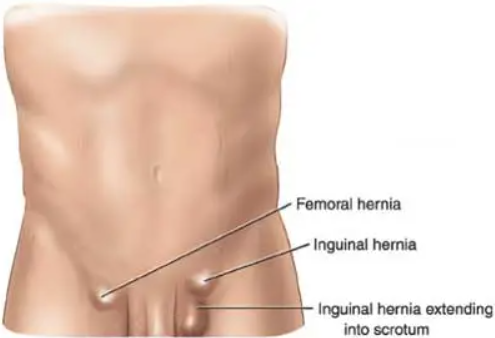
An inguinal hernia is a condition in which abdominal organs or tissues protrude through a weak point in the anterior abdominal wall in the groin area. It is most commonly seen in men, although it can also occur in women.
Symptoms
- Bulge in the groin area
- Pain during physical activity
- Discomfort while standing or walking
- Increase in bulge size during coughing
Why does a hernia occur?
The development of a hernia is associated with weakness of the abdominal wall. Possible causes include:
- Genetic factors
- Heavy physical strain
- Chronic cough
- Excess body weight
When is surgery needed?
Surgical treatment is required when the hernia causes pain, increases in size, or there is a risk of incarceration (strangulation). This condition can be life-threatening.
Treatment
The main treatment for an inguinal hernia is surgery. Modern approaches include:
- Open surgery
- Laparoscopic hernia repair
- Mesh implantation
Rehabilitation
After surgery, patients usually return quickly to daily activities. However, physical strain should be limited for a certain period.
When should you see a doctor?
If you notice a bulge or pain in the groin area, it is important to consult a surgeon in time to prevent complications.
Published: · Giorgi Shubitidze, General Surgeon