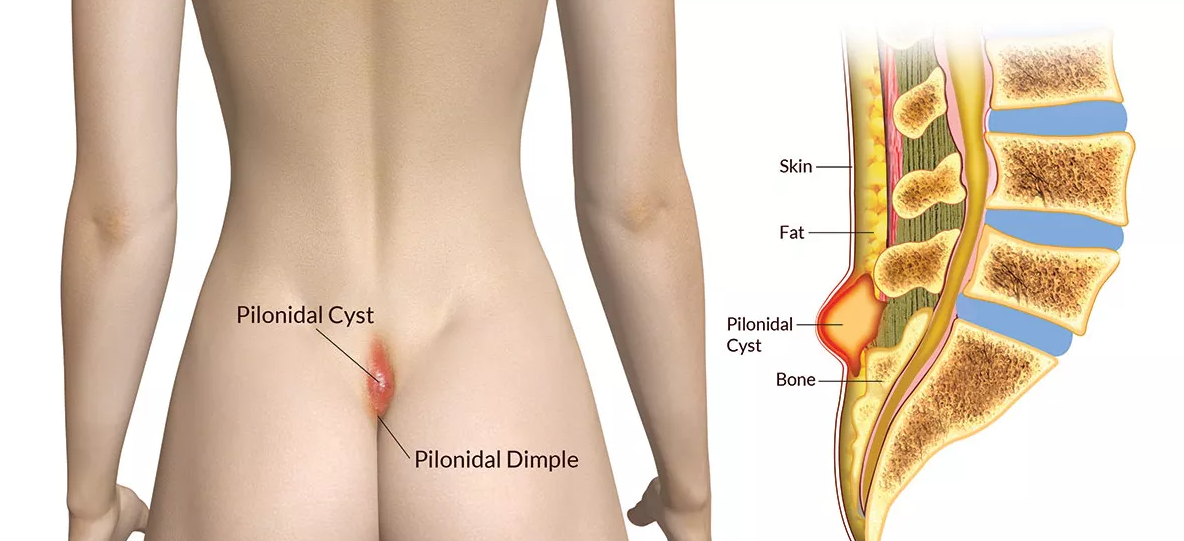
Pilonidal Cyst – Symptoms, Treatment and Surgery
A pilonidal cyst (pilonidal sinus) is a chronic inflammatory disease of the skin and subcutaneous tissues, most commonly developing in the sacrococcygeal area. The condition may remain painless or present with acute inflammation, abscess formation and purulent discharge.
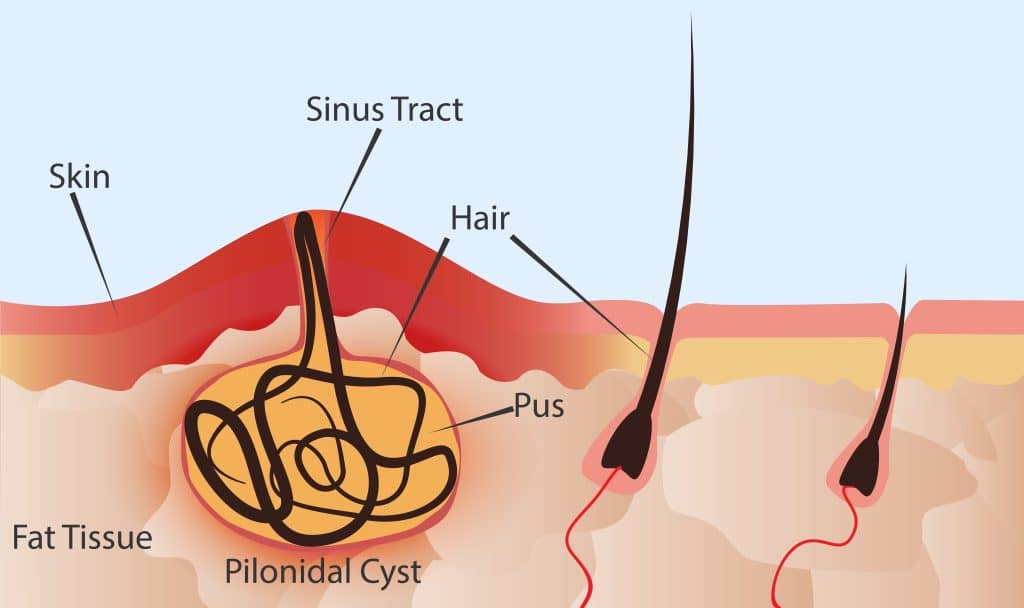
What is a Pilonidal Cyst?
A pilonidal cyst is a chronic inflammatory process that develops in the intergluteal cleft. Hair may penetrate beneath the skin, causing inflammation, infection and formation of a cystic cavity.
The disease is more common in young adults, especially men, people with excessive body hair and individuals who sit for prolonged periods.
Symptoms of a Pilonidal Cyst
- Pain in the tailbone area
- Swelling and redness
- Purulent or bloody discharge
- Unpleasant odor
- Discomfort while sitting
- Abscess formation and fever
Acute Pilonidal Abscess
In acute cases, purulent inflammation develops, accompanied by severe pain and swelling. In such situations, incision and drainage of the abscess is often required.
After the inflammation is controlled, definitive surgery is planned to reduce the risk of recurrence.
Chronic Pilonidal Cyst
In chronic forms, patients may experience periodic discharge, discomfort and recurrent inflammation. The condition may continue for years with intermittent exacerbations.
Surgical treatment is considered the most effective method for complete recovery.
Pilonidal Cyst Surgery
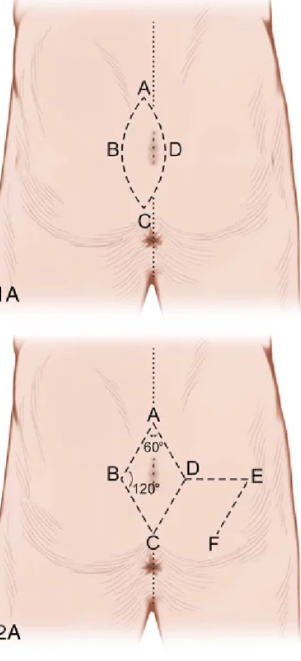
The goal of surgery is complete removal of the cyst, sinus tracts and infected tissues. The type of operation depends on the extent of the disease and the severity of inflammation.
Surgical Methods
- Open excision of the cyst
- Excision with primary closure
- Flap techniques for recurrent cases
- Abscess drainage in acute infection
In most cases, surgery is performed under spinal or general anesthesia.
Recovery After Surgery
The recovery period depends on the surgical method used. Most patients return to daily activities within several days, although complete wound healing may take several weeks.
Why is early surgery important?
The earlier a pilonidal cyst is treated, the lower the risk of severe inflammation, large abscesses and complications. Surgery performed at an early stage is often technically easier, requires less tissue removal and allows for faster recovery.
Which operation is more effective?
According to modern studies, complete excision of the pilonidal cyst and flap techniques are associated with relatively lower recurrence rates, although recovery may be longer. Minimally invasive procedures — such as pit picking, laser ablation or endoscopic treatment — allow patients to return to daily life more quickly, however the recurrence rate is significantly higher. In addition, after ablation procedures, performing a flap technique later may require removal of a larger amount of tissue, which can prolong complete rehabilitation.
Recommendations
- Maintain proper wound hygiene
- Avoid prolonged sitting
- Regular hair removal in the affected area
- Follow the surgeon’s recommendations
Frequently Asked Questions
Can a pilonidal cyst disappear on its own?
No. Symptoms may temporarily improve, however the disease frequently recurs.
Is surgery necessary?
In chronic and recurrent cases, surgery is considered the most effective treatment method.
How long does recovery take?
On average several weeks, although the exact duration depends on the type of surgery and wound healing.
Why is timely surgery recommended?
Early treatment reduces the risk of complications, large abscesses and recurrent infections, while recovery is often easier and faster.
Do you have symptoms of a pilonidal cyst?
Early diagnosis and treatment reduce the risk of complications and recurrence.
Записаться на консультациюPublished: · Giorgi Shubitidze, General Surgeon