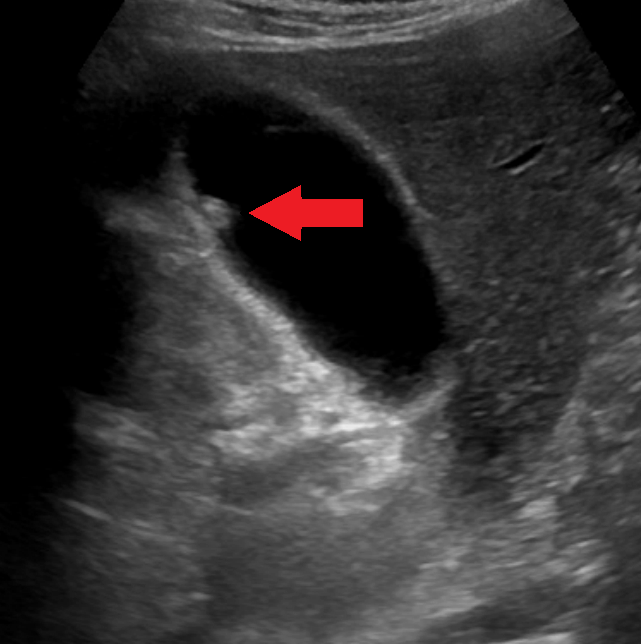
Gallbladder Polyp — When Is It Dangerous and When Is Surgery Needed?
A gallbladder polyp is a growth arising from the inner wall of the organ, most often found incidentally during a routine abdominal ultrasound. Most patients have no symptoms at all, which naturally raises the question — is this finding dangerous?
Types of polyps
- ✓ Cholesterol polyps — the most common type (about 60-70%), entirely benign
- ✓ Adenomas — true growths that, in rare cases, carry a risk of malignant transformation
- ✓ Adenomyomatosis — a benign hyperplastic change of the wall
Symptoms
Most polyps cause no symptoms at all. Rarely, mild pain may occur in the right upper abdomen, especially with larger polyps or when combined with gallstones.
Factors that increase malignancy risk
- ⚠ Size greater than 10 mm (malignancy risk rises sharply)
- ⚠ Age over 60
- ⚠ Primary sclerosing cholangitis
- ⚠ A single, broad-based polyp with wall thickening
- ⚠ Rapid growth during follow-up
Management by size (based on European guidelines)
| Size | Recommendation |
|---|---|
| ≤5 mm, no risk factors | No further follow-up needed |
| ≤5 mm with risk factors, or 6-9 mm without risk factors | Ultrasound surveillance at 6 months, 1 year, 2 years — stop if no growth |
| 6-9 mm with risk factors | Laparoscopic cholecystectomy, if the patient is fit for surgery |
| 10-20 mm | Considered potentially malignant — laparoscopic cholecystectomy recommended |
| Over 20 mm | Often malignant — requires further workup before surgery and extended surgical treatment |
Table based on the joint ESGAR/EAES/EFISDS/ESGE European guidelines on the management of gallbladder polyps. The final decision is made by the surgeon based on the individual case.
⚠ An important note
Research shows that gallbladder cancer is diagnosed at similar rates in people whether or not an ultrasound found a polyp. This means not every polyp is automatically a precursor to cancer — the decision is always individual, based on a combined assessment of size and risk factors.
Frequently Asked Questions
If a polyp was found incidentally, is surgery required?
Not always — small polyps without risk factors are often simply monitored with ultrasound.
How often should the ultrasound be repeated?
The standard schedule is at 6 months, 1 year, and 2 years — surveillance stops if there's no growth.
Can a polyp disappear on its own?
Small cholesterol polyps may shrink or remain stable over time, but this varies by individual.
Which symptoms mean I should see a doctor urgently?
If pain, fever, or nausea appear alongside the polyp, this may indicate a related complication and needs prompt evaluation.
Is the surgery the same as a regular gallbladder removal?
Yes, for small to medium polyps, standard laparoscopic cholecystectomy is used — see the detailed article on this procedure.
Conclusion
Most gallbladder polyps are benign and don't require immediate intervention. What matters most is a proper assessment of size and risk factors by an experienced surgeon, who determines whether monitoring is sufficient or surgery is needed.
About the author
Giorgi Shubitidze — general surgeon and laparoscopist, Tbilisi. Specializes in the diagnosis and laparoscopic treatment of gallbladder conditions.
If an ultrasound found a polyp, a consultation can help determine the right approach. Contact us via surgeon.ge.
This article is for informational purposes only and does not replace individual medical consultation. Diagnosis and treatment plans should be determined by a physician based on your specific test results.
Published: · Giorgi Shubitidze, General Surgeon