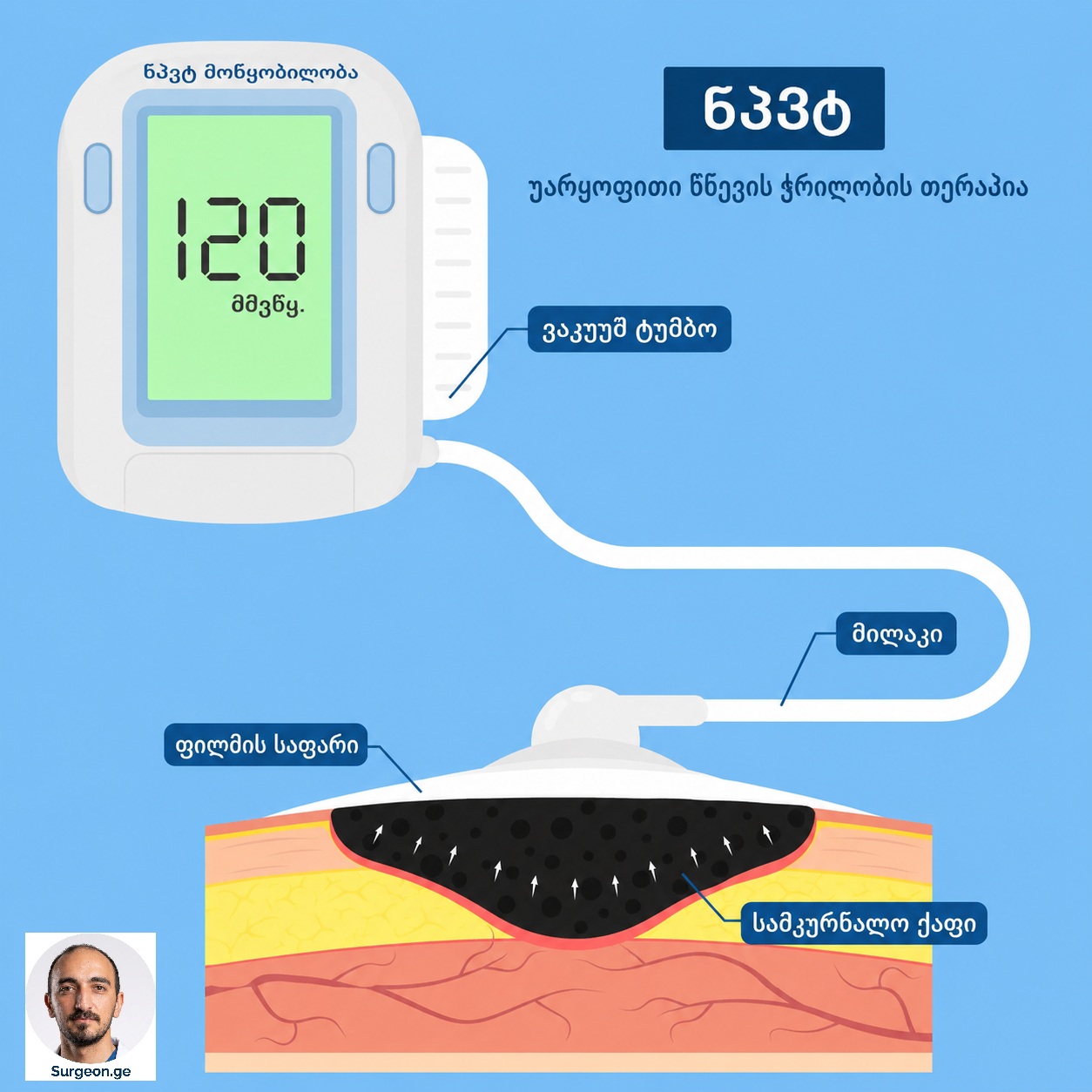
Vacuum Therapy (NPWT) — Modern Treatment of Infected and Complex Wounds
Vacuum therapy, or Negative Pressure Wound Therapy (NPWT), is a modern wound treatment method that accelerates the healing of infected and slow-healing wounds. It cleans the wound bed, reduces swelling, and stimulates the growth of living tissue. In Tbilisi, vacuum therapy for infected wounds is performed by general surgeon Giorgi Shubitidze.
What Is Vacuum Therapy
During vacuum therapy, a special foam dressing is placed on the wound and sealed airtight with a transparent film. A tube and pump are connected to the foam, creating controlled pressure below atmospheric level. This pressure continuously or intermittently removes excess fluid (exudate) from the wound, reduces swelling, and creates a favorable moist environment for healing.
The method is especially effective for wounds that heal slowly with conventional treatment or do not close at all — for example, deep cavities left after the drainage of an infected focus.
How Negative Pressure Works
The therapeutic effect of NPWT is based on several simultaneous mechanisms:
- ✓ Removal of excess fluid — continuously draws off exudate and inflammatory mediators, reducing swelling
- ✓ Improved circulation — supports local blood supply to the wound edges
- ✓ Stimulation of granulation tissue — promotes the growth of new, healthy tissue
- ✓ Reduced bacterial load — some microorganisms and necrotic material are removed along with the fluid
- ✓ Approximation of wound edges — a gentle contracting force draws the wound edges toward each other
Modern devices also offer a variant with an irrigation function (NPWT with instillation), which is especially effective for infected, heavily contaminated wounds.
When Vacuum Therapy Is Used
| Condition | Description |
|---|---|
| Infected wound | Deep cavities remaining after drainage of an abscess, phlegmon, or infected focus |
| Pilonidal sinus | Recurrent infected process in the sacrococcygeal area, especially when healing an open wound after surgery |
| Diabetic foot | Slow-healing ulcers associated with diabetes mellitus |
| Pressure sores | In long-term bedridden patients |
| Chronic wound | Wounds that do not close for a long time with conventional treatment |
| Postoperative complication | Infection or dehiscence of the wound at the suture site |
The specific indication is always assessed individually — the decision is made by the surgeon after examining the wound.
How the Procedure Is Performed
| Step | What it involves |
|---|---|
| 1. Assessment and preparation | The surgeon examines the wound and, if needed, performs cleaning (debridement) — removing necrotic tissue |
| 2. Fitting the foam | A special foam dressing is cut to the size of the wound and placed into the wound cavity |
| 3. Sealing | The foam is covered with a transparent film, creating an airtight space |
| 4. Connecting the pump | A vacuum pump is connected to the foam via a tube and set to the prescribed negative pressure |
| 5. Treatment and monitoring | The dressing stays for several days, then is changed; wound progress is assessed until closure |
The frequency of dressing changes and the pressure setting are chosen individually by the surgeon, depending on the type and course of the wound.
Benefits of Vacuum Therapy
- ✓ Accelerates the healing of complex and infected wounds
- ✓ Reduces the need for daily dressing changes
- ✓ Maintains a favorable moist environment for healing
- ✓ Reduces swelling and the risk of wound contamination
- ✓ In some cases reduces the need for repeat operations
⚠ Contraindications and Precautions
Vacuum therapy is not suitable for every wound. The method is used with caution or not at all if the wound contains an exposed blood vessel, organ, or bone without protective tissue; there is an uncontrolled infection; unremoved necrotic tissue remains in the wound; there is a tumor process in the wound area; or the patient has a high risk of bleeding.
For this reason, prescribing and performing vacuum therapy is always within the surgeon's competence — after assessing the type of wound, infection control, and the patient's general condition.
Frequently Asked Questions
What is vacuum therapy?
It is a modern wound treatment method (NPWT) in which controlled negative pressure is applied to the wound — it removes excess fluid, reduces swelling, cleans the wound, and stimulates the growth of new tissue.
Is the procedure painful?
It is usually well tolerated. The pump itself is mostly painless; mild discomfort may occur during dressing changes and is controlled with pain relief.
How long does treatment last?
It depends on the type and size of the wound. The dressing is usually changed every few days, and the total duration of the course is individual — determined by the surgeon based on the wound's progress.
Who provides vacuum therapy in Tbilisi?
In Tbilisi, vacuum therapy for infected wounds (NPWT) is performed by general surgeon Giorgi Shubitidze. You can book an appointment for a consultation.
Conclusion
Vacuum therapy (NPWT) is an effective, modern method for treating infected, chronic, and slow-healing wounds. It accelerates healing, reduces the risk of infection, and often improves the final outcome. The indication for treatment is assessed by the surgeon individually.
About the Author
Giorgi Shubitidze — general and laparoscopic surgeon, Tbilisi. Performs elective and emergency operations; specializes in septic surgery and the management of complex wounds, including the vacuum therapy (NPWT) method.
If you or someone close to you has a slow-healing or infected wound, an in-person or online consultation is available. Contact us via surgeon.ge.
This article is for informational purposes and does not replace an individual medical consultation. The indication for vacuum therapy and its performance are assessed by the surgeon individually, after examining the wound.
Published: · Giorgi Shubitidze, General Surgeon