Gallbladder Disease — Symptoms, Treatment, Diet, and Surgery
A complete guide to gallbladder pain, gallstone disease, medications, diet, and cholecystectomy
What the gallbladder is and where it's located
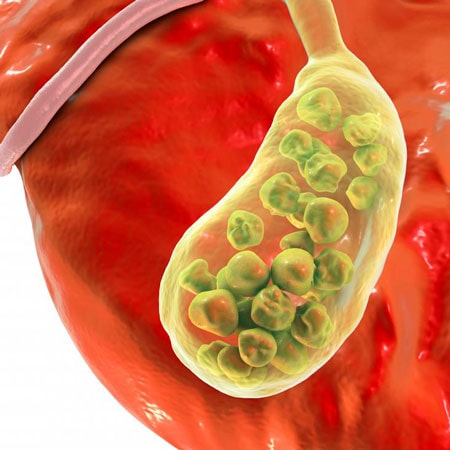
The gallbladder is a small, pear-shaped organ located in the upper right part of the abdomen, just beneath the liver. Its job is to store and concentrate bile produced by the liver between meals; after a fatty meal, it releases that bile through the bile ducts into the duodenum, where it helps digest fat.
Gallbladder symptoms
The most common symptoms of gallbladder disease are:
- 🔻 Pain in the upper right abdomen or epigastrium, often after a fatty meal
- 🤢 Nausea, occasionally vomiting
- 🎈 Bloating, a feeling of heaviness after eating
- 🌡️ Fever and chills — during a flare-up, a sign of inflammation (cholecystitis)
- 🟡 Yellowing of the skin and eyes, dark urine, pale stools — a sign the bile duct is blocked
Gallbladder pain — what it feels like and where
Gallbladder pain (so-called "biliary colic") typically starts suddenly, is fairly intense, and — despite the name — tends to be steady rather than wave-like. It's felt in the upper right abdomen or epigastrium and often radiates to the back or right shoulder blade. The pain usually develops 30 minutes to a few hours after a fatty meal and lasts anywhere from 30 minutes to several hours.
Gallbladder irritation — early signs
The term "gallbladder irritation" usually describes a milder, incomplete picture that falls short of a full biliary colic episode — periodic heaviness or discomfort under the right ribs, bloating, a feeling of needing to burp, or a bitter taste in the mouth after fatty food. These signs shouldn't be ignored — they often precede a more pronounced episode of gallstone disease or cholecystitis.
Causes and gallstone disease
The most common cause of gallbladder disease is gallstone disease — the formation of stones inside the gallbladder, which develops when the balance of substances in bile (cholesterol, bilirubin, bile acids) is disrupted. Stones can sit for years without causing symptoms ("silent" stones) or cause pain if they block the outflow of bile.
Risk factors include:
- ⚖️ Excess weight, and rapid, significant weight loss
- 🍔 A high-fat, high-cholesterol diet
- 🧬 Family history and age over 40
- 🤰 Pregnancy and hormonal factors
- 💉 Diabetes and a sedentary lifestyle
Complications that can follow gallstone disease include acute cholecystitis (inflammation of the gallbladder), a stone lodging in the common bile duct, cholangitis (infection of the bile ducts), and gallstone pancreatitis.
Diagnosis
The primary method for diagnosing gallbladder disease is an abdominal ultrasound, which shows stones and the condition of the gallbladder wall clearly. Additional blood tests (liver enzymes, bilirubin, inflammatory markers) may be needed, and, if necessary, a CT or MRI scan.
Treatment and medications
The treatment approach depends on the stage of the disease and its underlying cause:
⚠ Important — choleretic medications: "Bile-stimulating" (choleretic/cholekinetic) drugs stimulate bile production or gallbladder contraction, and are often recommended for complaints like heaviness or bloating. However, if there are stones in the gallbladder, these medications can dislodge a stone and cause it to block the bile duct — so they should never be taken without an ultrasound and a doctor's consultation first.
Diet for gallbladder disease
Eating habits play a significant role in preventing and managing symptoms:
| Category | ✅ Recommended | 🚫 Limit / avoid |
|---|---|---|
| Meat & fish | Lean, boiled or steamed meat and fish | Fatty, fried, smoked meat |
| Dairy | Low-fat cottage cheese, kefir, yogurt | High-fat cheese, cream, large amounts of butter |
| Vegetables & fruit | Cooked or fresh vegetables and fruit, fiber-rich foods | Large amounts of spicy or deep-fried vegetables |
| Fats | Olive oil, in moderation | Animal fat, margarine, fast food |
| Drinks | Plenty of water, moderate coffee (see FAQ) | Alcohol, carbonated and high-sugar drinks |
It also helps to eat frequent, smaller meals and to avoid sudden, drastic weight loss — both support steady bile flow and lower the risk of stone formation.
The gallbladder "cleanse" — myth or fact?
The popular "gallbladder cleanse" or "liver flush" (drinking olive oil with lemon juice or a salt solution) is not a scientifically validated method. The "stones" that people pass afterward are often the reaction product of oil and citric acid — soap-like clumps — rather than actual gallstones. Worse, if real stones are present, such a "cleanse" can dislodge one and cause an acute blockage of the bile duct, which then requires emergency surgery. The only proven way to "clear" the gallbladder is medical or surgical treatment, under a doctor's supervision.
Surgery — cholecystectomy
Removing the gallbladder (cholecystectomy) is the standard, most reliable treatment for symptomatic gallstone disease and its complications. Today, laparoscopic cholecystectomy is preferred — performed through a few small incisions, it offers a fast recovery, minimal pain, and minimal scarring. Open surgery is reserved for complex, anatomically difficult cases or pronounced inflammation. After the gallbladder is removed, the body continues producing bile in the liver and releasing it directly into the intestine, and most patients need no special long-term dietary restrictions.
Warning signs — when to seek emergency care
Seek immediate medical evaluation if you have: a high fever with chills, abdominal pain that doesn't ease after 6 hours, yellowing of the skin or eyes, dark urine or pale stools, or prolonged, uncontrollable vomiting — these can point to acute cholecystitis, an infection of the bile ducts, or pancreatitis.
Frequently asked questions
Is there a link between coffee and the gallbladder?
Several studies have found that moderate coffee consumption is associated with a somewhat lower risk of gallstone disease — likely because coffee stimulates gallbladder contraction and bile flow. That said, during an acute attack or if stones have already been confirmed, coffee intake is worth discussing individually with your doctor.
Can gallbladder pain cause a headache?
Gallbladder pain typically radiates to the back or right shoulder blade — a headache isn't one of its characteristic direct symptoms. An attack is often accompanied by nausea and general weakness, though, which some people may indirectly experience as a headache-like sensation. A persistent headache alongside abdominal pain still deserves its own separate medical evaluation.
What is gallstone disease?
It's a condition where solid stones form inside the gallbladder. They can exist for years without symptoms, or they can cause pain and complications if they block the outflow of bile.
What are "choleretic" (bile-stimulating) drugs, and is it safe to take them on your own?
These medications stimulate bile production or gallbladder contraction. If stones are present, taking them without medical guidance can dislodge a stone and cause an acute blockage — an ultrasound and a doctor's consultation are essential before starting them.
Can gallstones be treated without surgery?
In select cases involving small cholesterol stones, a doctor may consider a medication-based approach, though this isn't suitable for every patient and requires long-term monitoring. For symptomatic or recurring cases, laparoscopic surgery remains the most reliable solution.
What medication is used for gallbladder pain?
For acute pain, a doctor typically prescribes antispasmodic and pain-relief medications, and antibiotics if infection is present. Choosing and taking gallbladder medications on your own — including choleretic drugs — isn't safe, especially before a diagnosis is confirmed; the specific medication and dosage are always determined by a doctor based on test results.
Where is the gallbladder located?
The gallbladder sits in the upper right part of the abdomen, just under the liver — which is why related pain is typically felt in that area and often radiates to the back or under the right shoulder blade.
What diet is recommended for gallbladder disease?
The core principle is limiting fat — lean, boiled or steamed food, frequent smaller meals, enough fiber, and avoiding rapid weight loss. See the detailed table above, in the "Diet for gallbladder disease" section.
When is gallbladder surgery necessary?
Surgery (cholecystectomy) is recommended for symptomatic gallstone disease, recurring episodes of pain, or complications (acute cholecystitis, pancreatitis, a blocked bile duct). The laparoscopic approach is preferred today, offering a faster recovery.
Can gallbladder disease occur even without gallstones?
Yes — a less common condition called acalculous cholecystitis causes inflammation of the gallbladder without stones being present, usually in the setting of serious illness or after major surgery or trauma. It's diagnosed with the same imaging and blood tests, and can require the same urgent treatment.
About the author
Giorgi Shubitidze, MD — general and laparoscopic surgeon, Tbilisi. Performs laparoscopic cholecystectomy for gallstone disease and its complications.
To confirm a diagnosis or discuss an individual treatment plan, get in touch through surgeon.ge.
This article is for informational purposes only and does not replace individual medical consultation. For an accurate diagnosis and treatment plan, see a doctor.
Published: · Giorgi Shubitidze, General Surgeon